


Recent Posts
Category
Power Electronics: The Hidden Technology
In the last decade of 21st century, power electronics has seen a tremendous amount of growth due to smaller and accurate designs working at the heart of each and every electronic device, machine, appliance or system. The current arena of power electronics is dominated by providing the low noise accurate supply voltage rails and huge power handling capacity at higher efficiency in small factor.
Power electronics in layman terms is defined as the high power circuit design converting one level into different level of electrical energy. Power systems in current decade vary from range of mW (cellular mobile phones) to hundreds of MW. In the last few decades conversion of electrical energy has been done with the dissipative method where most of the energy is dissipated in the form of heat. These types of techniques use normally bulky passive components and huge heat sinks. The usage of huge heat sinks is due to huge amount of power loss and very low efficiency of previous design.

According to the latest surveys/research, currently 40% of the world power/energy are met with the usage of electrical systems, with more advancements in the field of renewable resources, the percentage will be going to shoot up to nearly 70-80% in the coming decade by 2025.The efficiency of power equipment varies from 90% (small design) to 95-98% (big complicated design models). Due to rapid advancements in the field of technology, the cost of the circuit and size is reducing at a faster rate and providing more efficiency as compared to the previous possible designs.
Challenges in Designing Power Electronics
The major challenges in the field of power electronics are cost, reliability, parasitic losses and electromagnetic interference. Areas like aerospace industries, automation and robotics industries has posted the biggest problems in front of power engineers because in order to fulfill the safety requirements. The safety requirement is the most difficult and unsolvable challenge in many fields involving power electronics devices.
The old technology of linear dissipative regulator is reliable as compared to newer regulators since new regulators used the bulky capacitors and lesser amount of shielding in the circuit. If due to some fault, larger supply is fed to the circuit then it will suddenly increase the current in the design which will lead to damaging and even burning of the complete circuit.
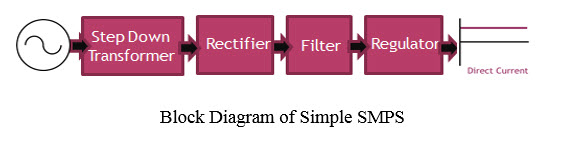
Even the latest MOSFETS or transistors, available in the market comes with very low power wattage i.e. 0.5 W or 1W (at max) in order to provide the cost effectiveness but this make the circuit more prone to damage since even small deviation from the expected behavior can lead to damaging the complete circuit. Ex- observed in the latest gadgets like LED TV’s, Mobile phone (since in order to provide cheaper designs, they are using the devices at the bottle neck of their limits).

Electromagnetic Interference in layman terms is defined as the amount of noise/disturbance produced by a power circuit due to change in one of electromagnetic radiation or induction. EMI must be kept in safe level to ensure the reliable operation for the given design.
Issue: Power supplies generate lot of noise in the circuit due to switching current at high operating frequency and most dependent customer being MOSFET for the same. Due to MOSFET, the switching speed is very high varying from 200 KHz to 100 MHz range. The generated EMI due to noise can be characterized as Differential and Common Mode Input
- Differential Mode Input–It basically consists of in and out of flowing current through the power supply by the path going from power lead to the source. It is the dominated in lower frequency range i.e. less than 5 MHz
- Common Mode Input – – It basically consists of in and out of flowing current through the power supply by the path going from power lead to the source through the lowest impedance path i.e. ground. It is the dominated in higher frequency range i.e. greater than 5 MHz
Minimizing EMI
- Bypassing – Bypassing is one of the most effective and cheapest method to tackle this problem. Used for reducing high switching current in the case of MOSFET with the help of large and bulky capacitor.
- Decoupling –Decoupling refers to isolation of two circuits with the help of a common line. It is implemented using low pass filters.
- Layout –Increase the distance between VDD and ground plane at the time of chip layout in order to reduce the EMI, reducing the inductor can also provide minimizing the EMI.
- Shields –Reducing the energy requirement from DC-DC supply by putting a metallic shield outside the power supply.
The single biggest failure for any network/system is power supply which major comprises of the below listed factors
- Internal supply failure- The Internal Supply failure issue arises in the case of ill-handling the devices but mostly to prevent this problem, there is an automatic shut off system inbuilt in our Laptops and other electronic devices.
- Voltage Irregularities– Most commonly consists of high voltage spikes, surges and delay in either input paths which switches the logic value.
- Outraged Power –Mostly external power failures due to change in supply voltage from the plugs can cause outraged power. This will happen for short span of time varying for some seconds to minutes.
Written by Sam Sangani

Sam Sangani is the President & CEO of PNC Inc., a Nutley, NJ based Printed Circuit Board manufacturer. Sam graduated from L. D. Engineering College with a BS Degree in Mechanical Engineering. He also continued his education and graduated from Steven’s Institute of Technology where he acquired a Master’s degree in Computer Science.
After completion of his BS, Sam worked as a QC Manager, for Xerox, Romania and London. He was responsible for the Quality Control of Cable and Wire Harness imports from Romania. After completing his Master’s Degree, he worked as a Senior Programmer with IBM, Tucson, Arizona. Sam was responsible for leading the Mainframe System Programming Team.
In 1997, Sam acquired PNC INC., a Nutley, NJ based PC Board fabrication Shop. From 1997-2013, Sam has made tremendous improvements and changes within PNC INC., as he added many new Products and Technologies in PNC’s portfolio. With his proven track record and leadership, PNC has never had an unprofitable year and has continued its growth yearly since 1997.
His current responsibilities are Strategic Planning, Corporate Management, New Business Ventures, Sales & Marketing, Trade Shows, Professional Services and leading productive teams to achieve peak potential. He has also utilized Lean Management techniques which have built a foundation for PNC’s high-paced growth. Sam also enjoys real-estate investing, web design & SEO, trading stocks, options, futures and Forex markets.


